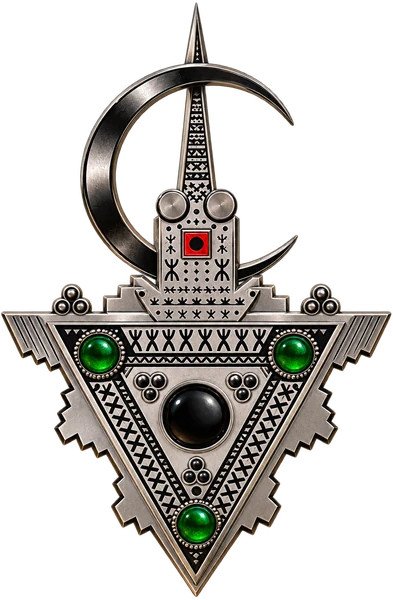
THe woman in black cloack
Story inpired from Moroccanfolktales by Abdou Abdellah
Once upon a time, there was a man named Abd al-Rahman. He was one of the tribe notables. He was known for his resistance and courage. Heleading the tribe in its harkas against the brutal colonizer and in defense of his tribe and the country.
He had one daughter called Rabha. She had a glamorous beauty and sharp wit. From an early age, her father taught her horse riding, and rifle shooting. When she became strong enough, she participated in the movements of the resistance against the colonizer. One day, her father was shot by a colonial soldier. He was shot dead in front of her eyes in one of the raids. The tribesmen unanimously agreed that she would be the successor to her father in the leadership of the tribe, because of her great intelligence in planning, high precision in execution, and knowledge of the art of war. Rabha was known by a supernatural ability to disguise and agility to hide which terrified the enemy and deprived their eyes from sleep.
Rabha preferred to carry out her operations under the cover of darkness. As she was wrapped in a black hayke and rode her dark horse. She was nicknamed by some outsiders as the black riding hood women; others preferred to call her the mad lioness because she took shelter in caves where lions used to live once in the Atlas mountains. Rabha resorted to the high mountains, where she escaped from the treachery and oppression of the enemy and from the betrayal of informants.
At that time, the resistance lacked arms and ammunition to confront the usurper of the country and the oppressor of the people. Although the enthusiasm was high and the signs of victory were close and visible, the lack of weapons was shameful and disappointing. Rabha planned to attack one of the military barracks to get weapons. She chose Christmas time to carry out her plan because soldiers would be preoccupied by the celebrations and distracted from keeping eye on the armory.
Rabha at a night without moonlight, snaked into the weapon store, took the guns and ammunition, and fled to the high mountains with her comrades. In the morning the setback was great and the humiliation was disgraceful. The colonizer was so furious and enraged. Therefore, he took revenge on the people and abused, tortured, and killed the inhabitants of the tribes. The condition for a truce and stop the hostilities against people was the head of the woman of the black riding hood. Rabha, disguised in the crowed, whispered and ordered to accept the condition. She knew that the community had suffered much and unable to bear more. She hopped to rid them of the hands of the brutal colonizer. Rabha said to her companions:” the snake is wounded, we have to cut the head”. One of her companions addressed the General loudly, his name was Hamza, “We will bring you Rabha and her comrades as dead bodies, and if we don't, you can kill us all.”
Only three days before bringing the head of Rabha. The carpenter of the tribe prepared the coffins for the corpses. The colonizer was preparing for a big party for which soldiers, officials, and symbols of the authority were invited. They were preparing to burry the symbols of resistance the eradication of the hope of independence and freedom. On that awaited day, a procession appeared carrying ten coffins on shoulders. Women were wailing and children crying behind. The procession of the coffins entered the General residence. Everyone was waiting eagerly to see the head of Rabha and the dead bodies of her resisting comrades. Surprisingly, like from a toy box, Rabha and the resisters came out of the coffins with rifles and machine guns. They started shooting bullets in all directions. The badges were strewn with blood. Caps flew in the air.
Original Story © 2026 Abdou Abdellah. All rights reserved.